
Winter Trousers
;BackgroundColor=ffffff)
;BackgroundColor=ffffff)
;BackgroundColor=ffffff)
;BackgroundColor=ffffff)
;BackgroundColor=ffffff)
;BackgroundColor=ffffff)
;BackgroundColor=ffffff)
;BackgroundColor=ffffff)
;BackgroundColor=ffffff)
;BackgroundColor=ffffff)
;BackgroundColor=ffffff)
;BackgroundColor=ffffff)
What makes a good pair of winter cycling trousers?
You can recognise high-quality winter trousers not by the thickness of the material, but by their intelligent functionality. Modern models are high-tech products made of several layers that are perfectly harmonised with each other.
The inner material – usually brushed fleece or so-called Roubaix material – retains heat without retaining moisture. On the outside, a windproof or water-repellent layer protects against the elements. A breathable membrane often works in between, wicking perspiration to the outside but blocking wind and rain.
Breathability is crucial, especially in winter. Non-breathable trousers quickly cause you to overheat – and as soon as you go downhill, the moisture cools down in no time. This is why a zonal construction is ideal: windproof at the front, breathable at the back.
High-quality winter trousers offer you:
- Optimum thermal protection thanks to roughened inner lining
- Windproof front areas for sensitive zones
- Water-repellent or waterproof coatings for wet conditions
- Elasticated materials with 4-way stretch for maximum freedom of movement
- Breathable membranes for a balanced climate
Bib tights or without straps?
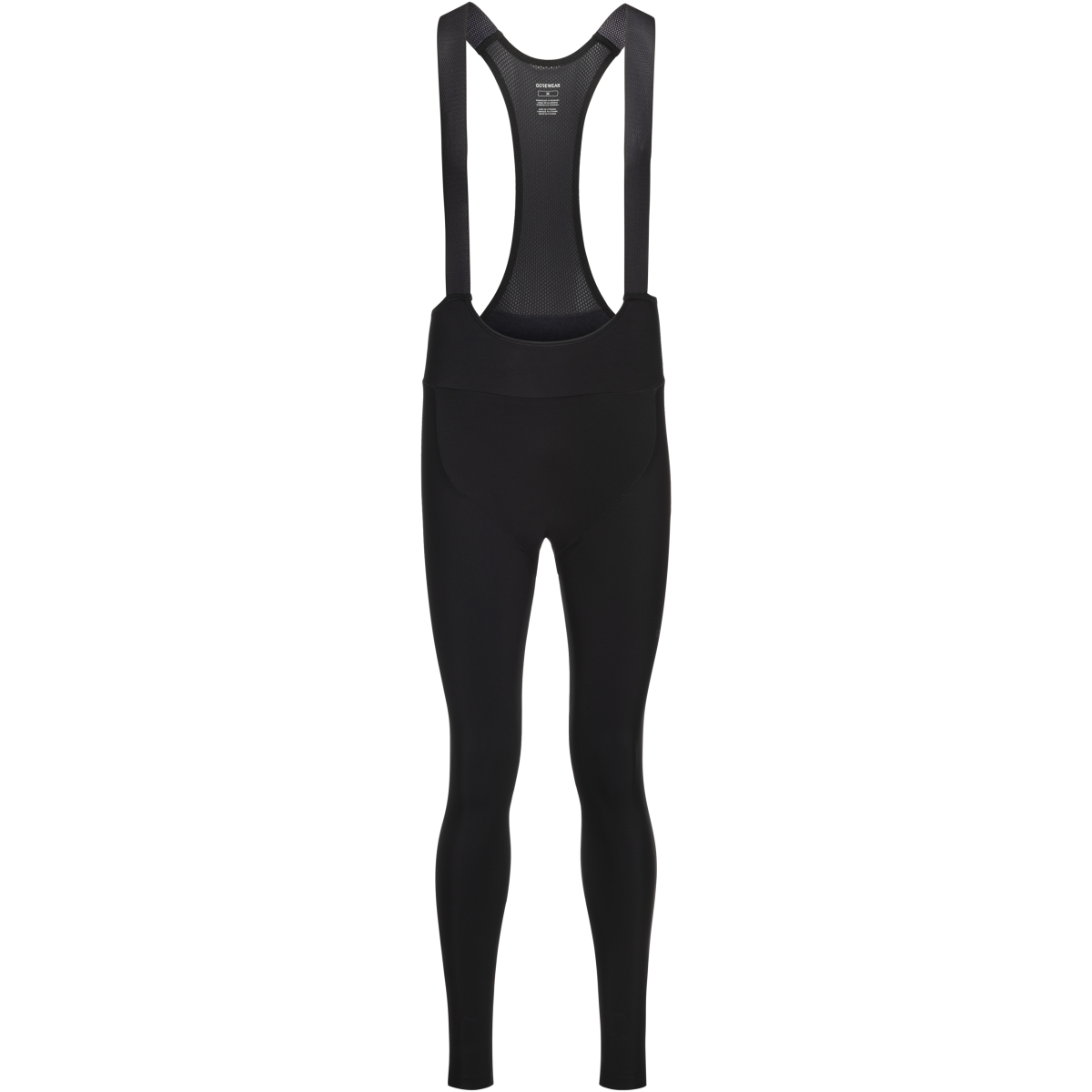
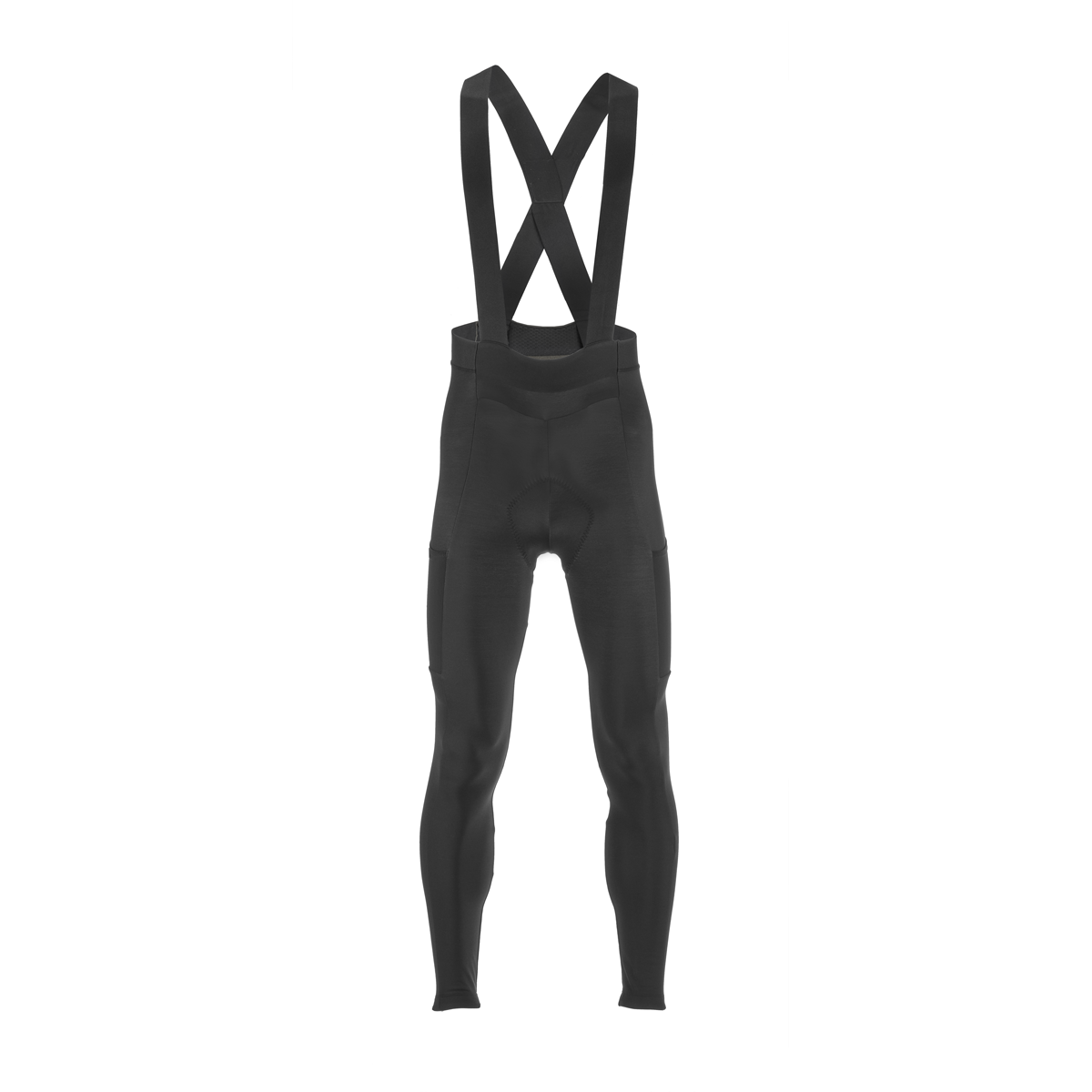
Whether you opt for bib tights (with straps) or classic trousers depends very much on the intended use. Bib tights are the sportier option: They fit perfectly, do not slip and also warm the lower back. The straps prevent the trousers from shifting during movement and avoid the typical pressure of the waistband on the stomach – a real comfort advantage on long tours or in a stretched racing position.
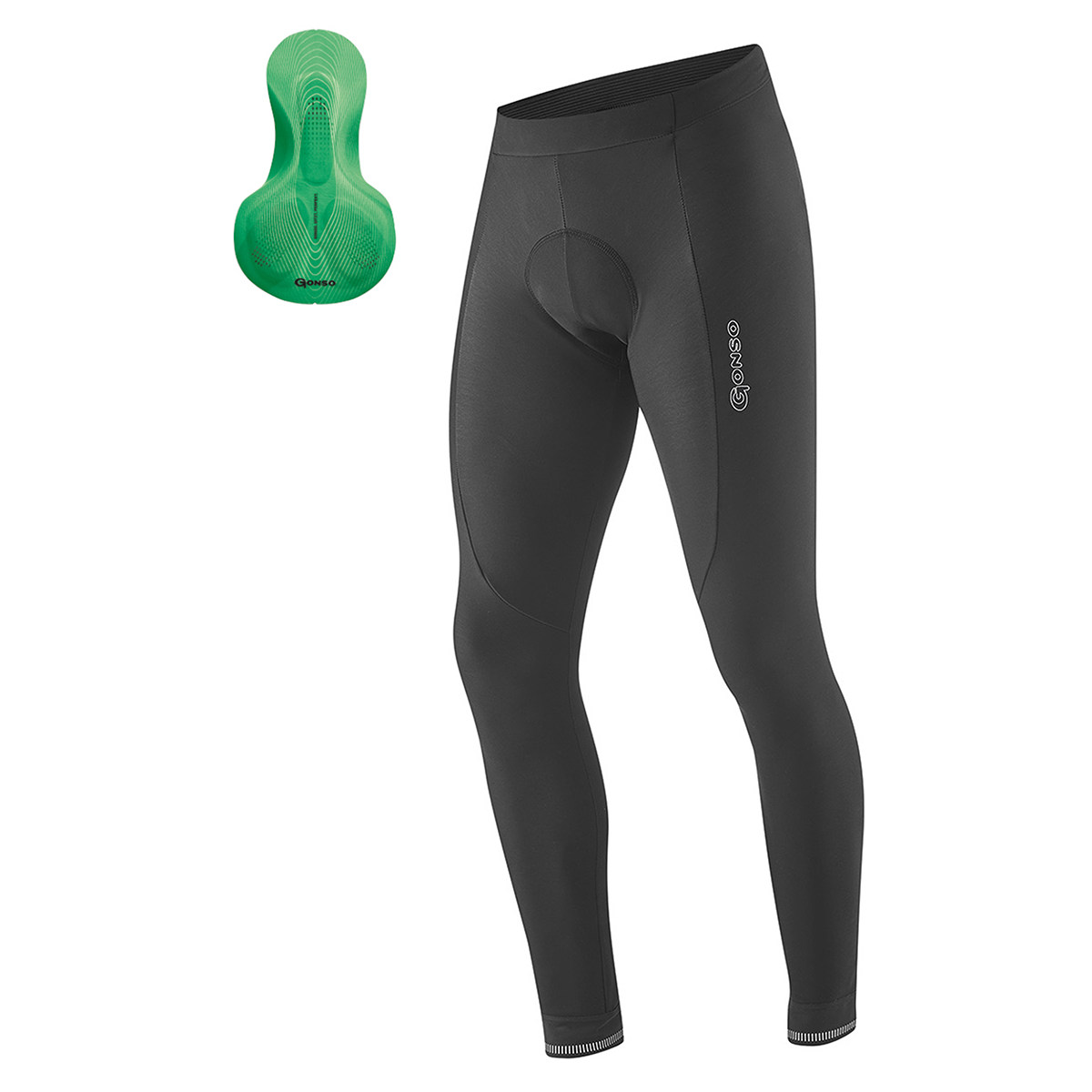
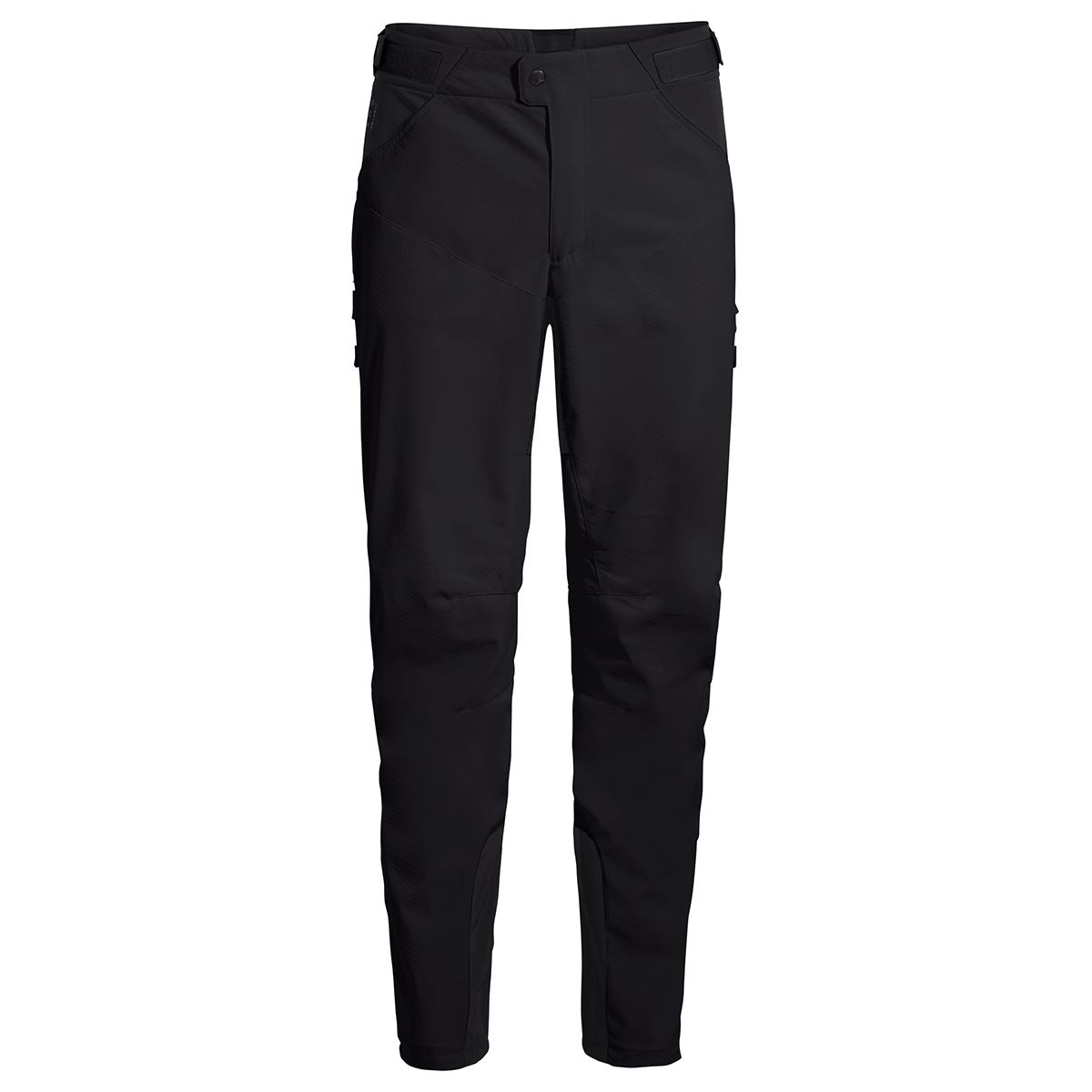
Strapless bike pants, on the other hand, are more flexible, especially for commuters or leisure riders who take their trousers on and off frequently. Many models offer elasticated, adjustable waistbands or zips to adapt them to the shape of your body.
Another advantage: Bib shorts are better at wicking moisture away from the upper body. In winter, when you wear several layers, this is a real plus for the microclimate.
The seat pad – underestimated, but crucial
The seat pad is the centrepiece of every pair of cycling pants. Especially in winter, when longer tours become more demanding due to the cold, comfort is crucial. A good cushion reduces pressure peaks, absorbs road buzz and ensures optimum blood circulation – this not only prevents pain, but also fatigue.
The pad differs greatly depending on the use:
- Road bike pad: Thinner, denser and more preformed. It supports a sporty, forward-leaning riding position.
- MTB pad: Slightly thicker, with additional cushioning against knocks and bumps.
- Gravel pad: The happy medium – comfort plus freedom of movement.
- Hybrid pad: Softer and more largely cut, ideal for upright sitting positions.
Materials and membranes – the science behind comfort
Today, winter cycling trousers are made from sophisticated textile combinations that harmonise warmth, protection and freedom of movement. Materials such as ThermoRoubaix, Softshell or SuperRoubaix, which are elastic, warm and breathable at the same time, have proved particularly effective.
- Windproof vs. wind-repellent: Windproof trousers block the wind completely, but are less breathable. Wind-repellent versions allow some air to circulate – ideal for training sessions.
- Water-repellent vs. waterproof: A DWR (Durable Water Repellent) coating is usually sufficient to repel wheel spray. If you're travelling in constant rain, opt for models with an integrated membrane.
- Stretch: No comfort without elasticity. Look for 4-way stretch – this is the only way to ensure unrestricted freedom of movement.
Details that make the difference
What at first glance appears to be of secondary importance often determines comfort on long journeys:
- Flat seams: Prevent pressure points and chafing.
- Slip-resistant leg cuffs: Hold the trousers securely in place, even under overshoes.
- Zips at the leg ends: Make it easier to put on cycling shoes.
- Raised back: Protects the kidney area from the cold.
- Mesh straps: Regulate humidity and prevent heat build-up.
- Lining: Soft, insulating, quick-drying – a must for winter models.
- Reflective design elements: Increase visibility at dusk or in fog.
Women's models – comfort through intelligent details
When it comes to fit, women have special requirements that good manufacturers take into account. This starts with the chamois: female pads are shorter, wider and softer to avoid pressure in the wrong places.
The strap design also plays a major role. Many women's models rely on special zips or detachable straps for a quick bathroom break without having to remove the top completely. Elasticated and crossed straps ensure optimum support without constriction.
The waistband is usually cut higher and slightly pre-shaped to keep the stomach and kidneys warm – particularly comfortable on long tours.
Which model suits which use?
Each discipline has its own requirements:
- Road bike: Tight cut, windproof front, aerodynamic shape. (Bib) Tights recommended.
- MTB: Robust materials, often with reinforcements on the knees or seat, slightly looser cut.
- Gravel: Combination of comfort and weather protection, often with pockets and breathable membrane.
- Touring & commuting: Suitable for everyday use, water-repellent, reflective details, lightly lined.
Conclusion: Stay warm without compromise
Good winter cycling trousers are not a minor matter, but the foundation of your winter training. It determines whether you can maintain – or even improve – your performance. Pay attention to material quality, seat padding, fit and weather protection. Then choose your model according to how and where you ride.
If you ride a lot and regularly, you should invest in high-quality bib tights with a windproof front, breathable back and ergonomic seat pad. For leisure riders and commuters, comfortable, water-repellent bike pants with a soft inner lining are often sufficient.
With the right trousers, you'll not only ride warmer, but also more relaxed – even when the thermometer has long since dropped into the single digits.